What Is WBP Glue Plywood? A Complete Buyer’s Guide to Waterproof Plywood
When buying plywood for construction, furniture, transportation, marine-related applications, or other moisture-prone environments, one specification appears frequently in supplier quotations:
But what does WBP actually mean?
Is WBP plywood completely waterproof? Is phenolic glue better than melamine glue? Can WBP plywood be used outdoors? And what should importers check before buying several containers from a WBP Plywood Supplier?
These questions matter because “WBP” describes an important bonding characteristic, but it does not tell you everything about the plywood.
This guide explains what WBP plywood is, how Phenolic Glue works, where Waterproof Plywood is suitable, and how international buyers can evaluate suppliers before placing a bulk order.
What Is WBP Glue Plywood?
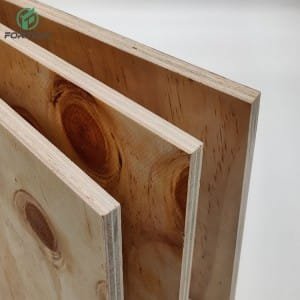
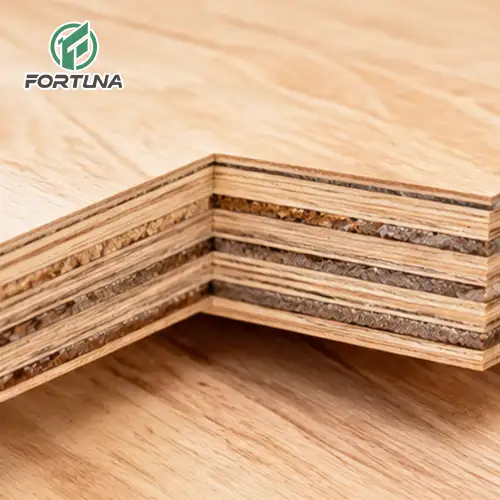
WBP Glue Plywood is plywood manufactured with a water-resistant adhesive system designed to maintain strong bonding when exposed to moisture or water. WBP commonly refers to “Weather and Boil Proof,” indicating a higher level of bond durability than ordinary interior plywood.
The key point is that WBP refers primarily to the glue-bond performance, not simply to the plywood’s surface appearance.
A WBP panel may use different veneer species, core constructions, thicknesses, and surface treatments depending on the manufacturer’s specification.
For B2B buyers, this means that two plywood products described as “WBP plywood” may not have identical performance.
The complete specification should always be checked.
What Does WBP Mean in Plywood?
WBP traditionally means:
Weather and Boil Proof.
The term is widely used in international plywood trading to describe plywood bonded with adhesives capable of resisting demanding moisture conditions.
Compared with ordinary interior-grade plywood, WBP plywood is intended for applications where moisture resistance and bond durability are more important.
However, buyers should avoid treating “WBP” as a universal guarantee that a panel can remain permanently exposed to weather or submerged in water.
The actual performance depends on:
Adhesive system
Veneer quality
Core construction
Manufacturing process
Pressing conditions
Panel thickness
Surface treatment
Applicable product standard
This is why professional importers request technical data rather than purchasing based on the WBP label alone.
What Is Phenolic Glue?
Phenolic glue is a resin-based adhesive commonly used when plywood requires strong and durable bonding under demanding moisture conditions.
Phenolic resin adhesives are particularly important in plywood applications where the glue line needs to maintain integrity during exposure to water.
This is one reason Phenolic Glue Plywood is widely associated with:
WBP plywood
Exterior-oriented plywood
Film faced plywood
Concrete formwork panels
Heavy-duty construction panels
The adhesive, however, is only one part of the finished product.
A high-quality adhesive cannot compensate for poor veneer preparation, excessive core gaps, inadequate pressing, or inconsistent manufacturing.
For this reason, buyers should evaluate the complete production process.
WBP Plywood vs Ordinary Plywood
One of the easiest ways to understand WBP plywood is to compare it with standard interior plywood.
| Feature | WBP Plywood | Ordinary Interior Plywood |
|---|---|---|
| Moisture Resistance | High, depending on specification | Lower |
| Glue System | Water-resistant adhesive | Interior-grade adhesive |
| Wet Environment | More suitable | Generally unsuitable |
| Construction Use | Common | Limited |
| Long-Term Outdoor Use | Depends on rating | Generally unsuitable |
| Cost | Usually higher | Usually lower |
| Typical Applications | Construction, furniture, demanding environments | Dry interior applications |
The important distinction is not simply price.
If a project is exposed to humidity, accidental water contact, or changing environmental conditions, using a plywood with an appropriate bond classification can reduce the risk of delamination and premature failure.
Is WBP Plywood Waterproof?
This is one of the most important questions for buyers.
WBP plywood is highly water-resistant at the glue-bond level, but “WBP” should not automatically be interpreted as permanently waterproof plywood.
There is a difference between:
Water-resistant bonding
Weather exposure
Permanent outdoor exposure
Continuous immersion
A WBP adhesive system can provide excellent bond durability, but the overall panel’s suitability depends on its complete construction and applicable standard.
For a project requiring permanent exterior exposure, buyers should specify the appropriate exterior-grade plywood rather than relying on the word “WBP” alone.
For marine applications, the buyer should also confirm whether the product meets the required marine plywood specification.
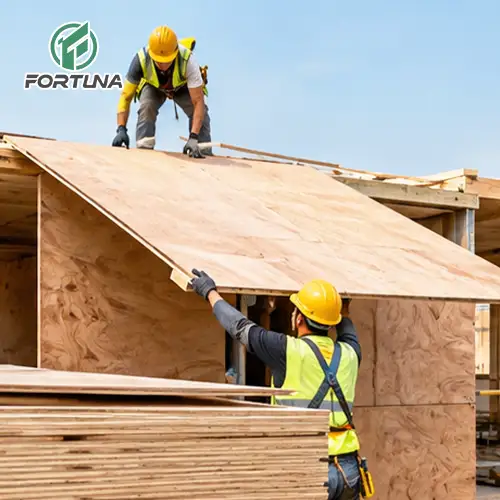
Where Is WBP Plywood Used?
WBP Plywood is popular because it provides a useful balance between moisture resistance, strength, and cost.
Typical applications include:
1. Construction
WBP plywood can be used in various construction-related applications where moisture-resistant bonding is required.
Potential uses include:
Wall systems
Flooring components
Roofing-related applications
General construction panels
Temporary construction structures
The exact application should always follow the relevant structural specification.
2. Furniture Manufacturing
WBP plywood is also widely considered for furniture used in environments where occasional moisture exposure is possible.
Examples include:
Kitchen cabinets
Bathroom furniture
Utility cabinets
Storage systems
Commercial furniture
For decorative furniture, buyers may combine a WBP core with:
Natural veneer
Melamine
HPL
PVC
Paint
3. Transportation and Packaging
Moisture-resistant plywood can be useful for heavy-duty packaging and transportation applications.
For example:
Export crates
Industrial packaging
Machinery cases
Heavy-duty boxes
Transport platforms
The correct plywood thickness and structural performance should be selected according to the load requirements.
4. High-Humidity Environments
WBP plywood is particularly attractive when the material may experience higher humidity than ordinary interior applications.
This does not mean every WBP panel is suitable for permanent outdoor use.
The exposure environment should always be part of the purchasing specification.
WBP Plywood vs Marine Plywood: Are They the Same?
No.
This is another common misunderstanding in international plywood sourcing.
Marine plywood is a specific product category designed for demanding applications where high-quality veneers, bonding, construction, and durability are important.
WBP describes an adhesive/bonding characteristic.
Therefore:
WBP plywood is not automatically marine plywood.
A marine plywood product may use a WBP-type adhesive system, but the product’s overall construction and compliance requirements determine whether it qualifies as marine plywood.
For boat building or marine engineering projects, buyers should request the applicable marine plywood standard and test documentation.
WBP Plywood vs Film Faced Plywood
These products are also frequently confused.
WBP Plywood
The primary focus is the water-resistant bonding system.
Film Faced Plywood
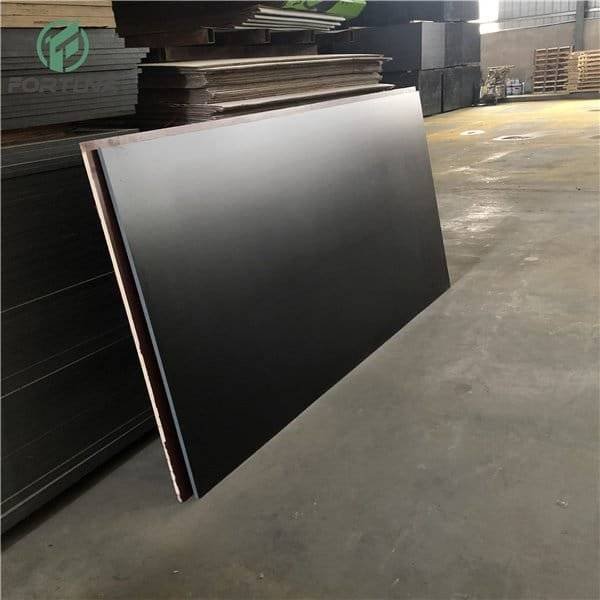
The plywood is covered with a protective film, commonly a phenolic film, to create a smooth, durable surface for applications such as Concrete Formwork.
| Feature | WBP Plywood | Film Faced Plywood |
|---|---|---|
| Main Feature | Water-resistant glue bond | Protective film surface |
| Typical Use | Construction & furniture | Concrete formwork |
| Surface | Natural or finished veneer | Phenolic film |
| Concrete Release | Limited | Excellent |
| Decorative Applications | Possible | Generally not the main purpose |
| Custom Finishes | Wide range | More application-specific |
If your project involves repeated concrete casting, Film Faced Plywood is generally the more application-specific choice.
What Makes Good WBP Plywood?
A reliable WBP Plywood Supplier should be able to explain more than the glue type.
Buyers should evaluate at least seven factors.
1. Veneer Quality
Poor-quality veneers can create:
Core gaps
Weak areas
Uneven thickness
Reduced strength
The appearance of the face veneer should not be the only quality indicator.
2. Core Construction
Ask what species and construction are used in the core.
Common options may include:
Poplar
Eucalyptus
Pine
Hardwood
Mixed/combi core
Different core constructions influence strength, density, weight, cost, and machining performance.
3. Glue Type
Ask specifically:
What adhesive is used, and what bond classification does the finished panel meet?
A supplier should be able to provide technical information rather than simply saying “waterproof glue.”
4. Pressing Process
Hot pressing is critical to plywood quality.
Temperature, pressure, pressing time, veneer moisture, and glue application all influence the final bond.
Poor process control can cause delamination even when a supplier claims to use a premium adhesive.
5. Thickness and Tolerance
For large construction projects, thickness consistency matters.
Ask for:
Nominal thickness
Actual thickness
Thickness tolerance
Panel dimensions
This is particularly important when plywood will be integrated into a prefabricated system.
6. Moisture Content
Improper moisture content can contribute to:
Warping
Cracking
Dimensional changes
Installation problems
For container-scale orders, moisture management is also important during packaging and transportation.
7. Test Reports and Certifications
Depending on the destination market and application, buyers may require documentation related to:
Formaldehyde emissions
Bonding performance
Structural performance
FSC certification
CE-related requirements where applicable
Third-party inspection
Do not assume that one certificate covers every product or every market.
Ask the supplier to provide documentation for the specific plywood specification being purchased.
How to Choose a WBP Plywood Supplier in China
For international importers, selecting the supplier is just as important as selecting the product.
A professional China WBP Plywood Supplier should be able to provide clear answers to the following questions:
Can you provide a complete technical specification?
The document should identify thickness, dimensions, core, face/back veneer, glue, surface treatment, and relevant standards.
Can you provide samples?
A sample allows buyers to evaluate:
Surface quality
Core construction
Thickness
Bonding
Sanding
Overall workmanship
Can you support third-party inspection?
For large orders, buyers may consider independent pre-shipment inspection.
Can you provide consistent repeat production?
This is especially important for wholesalers and distributors.
A good first shipment is not enough.
Consistency across the second, fifth, and tenth shipment is what creates a reliable supply chain.
What Should Importers Include in an RFQ?
Instead of sending:
“Please quote WBP plywood.”
send a detailed specification.
For example:
Product: WBP plywood
Application: Commercial construction
Thickness: Required project specification
Dimensions: Required project specification
Face/Back: Required grade
Core: Specify preferred species or acceptable alternatives
Glue: WBP / required adhesive specification
Emission: Required market standard
Quantity: Container or project quantity
Packaging: Export packaging
Inspection: Third-party inspection if required
Destination: Port and country
This makes supplier quotations much easier to compare.
It also prevents a common sourcing problem:
Two suppliers quote the same product name but are actually offering different plywood constructions.
Why Buy WBP Plywood from China?
China has a large and mature engineered wood manufacturing industry.
For international B2B buyers, Chinese manufacturers can offer:
Large production capacity
Competitive factory pricing
Multiple veneer and core options
OEM specifications
Customized dimensions
Export packaging
Container-scale supply
However, price should not be the only purchasing criterion.
For a large project, a slightly cheaper panel can become much more expensive if it creates:
Quality claims
Installation problems
Shipment delays
Rejected goods
Replacement costs
The better approach is to compare total delivered value, not just FOB unit price.
Why Consider Fortuna Wood for WBP Plywood?
Fortuna Wood provides plywood products for international buyers looking for construction and engineered wood panel solutions.
For project contractors, wholesalers, and importers, the important purchasing questions are straightforward:
What specification do you need?
What quantity do you require?
Which market will the plywood enter?
What standards apply?
What core and face materials are acceptable?
What delivery schedule is required?
Fortuna Wood can use these requirements as the starting point for a product quotation rather than treating “WBP plywood” as a one-size-fits-all product.
For bulk orders, buyers should confirm the exact technical specification, certification and test documentation for the product being quoted before placing an order.
Visit: https://www.fortunawood.cn/
WBP Plywood Buying Checklist
Before approving a supplier, use this checklist:
☐ Confirm plywood application
☐ Confirm WBP/bond requirement
☐ Confirm veneer species
☐ Confirm core construction
☐ Confirm thickness and tolerance
☐ Confirm dimensions
☐ Confirm adhesive system
☐ Confirm emission requirements
☐ Request product samples
☐ Request technical data
☐ Verify applicable certifications
☐ Confirm packaging
☐ Confirm container loading plan
☐ Agree inspection procedure
☐ Confirm production lead time
☐ Confirm shipping terms
For large-volume buyers, this simple checklist can prevent many specification misunderstandings.
FAQs
1. What does WBP stand for in plywood?
WBP traditionally means Weather and Boil Proof. It is commonly used in the plywood industry to describe panels bonded with adhesives designed to provide high moisture resistance and durable bonding.
2. Is WBP plywood waterproof?
WBP plywood provides strong water-resistant bonding, but the term should not automatically be interpreted as meaning the entire panel is permanently waterproof or suitable for continuous immersion.
3. What is Phenolic Glue?
Phenolic glue is a resin-based adhesive commonly used in plywood requiring durable bonding under demanding moisture conditions.
4. Is WBP plywood suitable for outdoor use?
It depends on the product’s complete specification and exposure classification. Buyers should specify an appropriate exterior-rated product when permanent weather exposure is expected.
5. Is WBP plywood the same as marine plywood?
No. WBP describes a bonding characteristic, while marine plywood is a specific product category with requirements covering the overall plywood construction and intended application.
6. Is WBP plywood good for construction?
Yes, WBP plywood is commonly used for construction-related applications where moisture-resistant bonding is required. The exact structural specification must match the project.
7. Which is better: WBP plywood or film faced plywood?
Neither is universally better. WBP plywood focuses on moisture-resistant bonding, while Film Faced Plywood is specifically designed with a protective film surface and is widely used for concrete formwork.
8. What should I ask a China WBP Plywood Supplier?
Ask for complete specifications covering veneer, core, thickness, dimensions, adhesive, applicable standards, certifications, test reports, packaging, MOQ, lead time, and inspection procedures.
Final Verdict: Is WBP Plywood Right for Your Project?
WBP Plywood is a practical choice when a project requires plywood with a durable, moisture-resistant glue bond.
But experienced buyers should look beyond the three letters “WBP.”
The real question is:
Does the complete plywood specification match the project’s environment, performance requirements, regulations, and budget?
For global importers and project buyers, the best purchasing strategy is to specify the plywood by its construction, adhesive, performance requirements, dimensions, certifications, and intended application.
If you are purchasing WBP Plywood in container quantities, send the supplier your complete technical requirements before requesting a quotation. This allows manufacturers to recommend the appropriate construction and provide a more meaningful price comparison.
Looking for a WBP Plywood Supplier in China? Contact Fortuna Wood with your required thickness, dimensions, core, quantity, destination market, and application for a project-specific quotation.