Film Faced Plywood vs Marine Plywood: What’s the Difference?
When sourcing plywood for construction, infrastructure, marine engineering, or commercial projects, buyers often ask one important question:
Should I choose Film Faced Plywood or Marine Plywood?
Although both products are manufactured from high-quality veneers and waterproof adhesives, they are designed for very different applications.
Selecting the wrong material can lead to:
- Reduced service life
- Higher maintenance costs
- Construction delays
- Increased project expenses
- Lower concrete finish quality
For project contractors, distributors, wholesalers, and importers, understanding the differences between Film Faced Plywood and Marine Plywood helps ensure better project performance and a stronger return on investment.
As an experienced plywood manufacturer and exporter, Fortuna Wood supplies both products to customers worldwide. This guide explains their key differences, advantages, and ideal applications to help buyers make informed purchasing decisions.
What Is Film Faced Plywood?
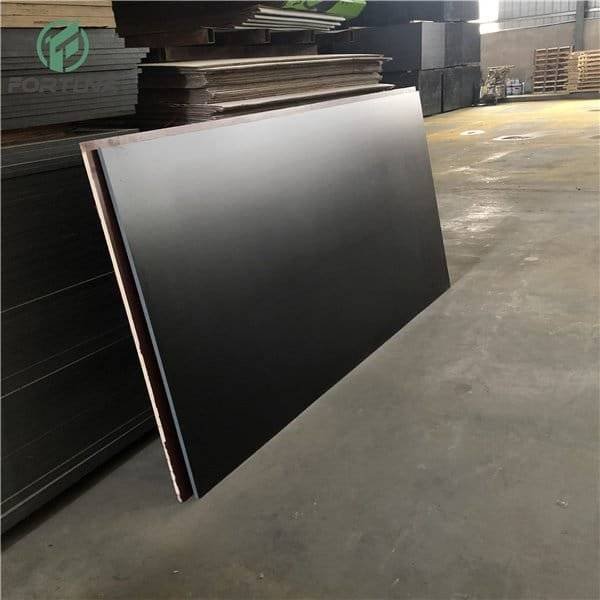
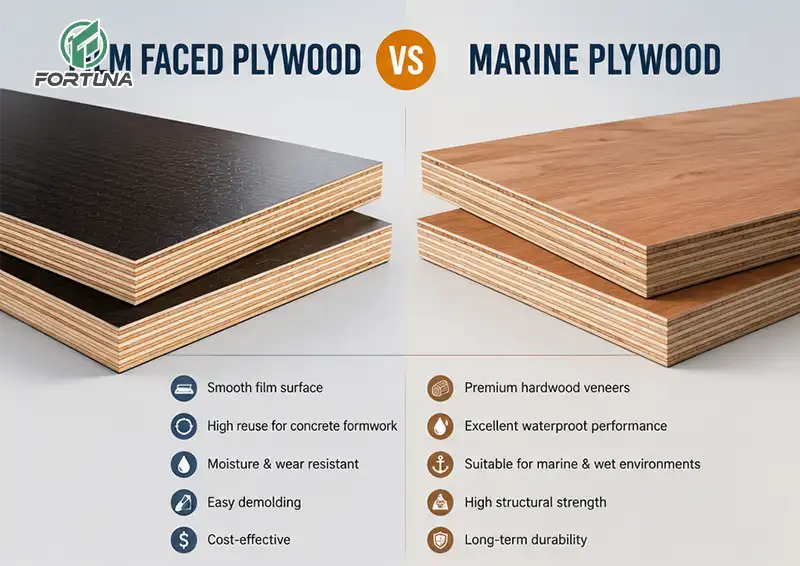
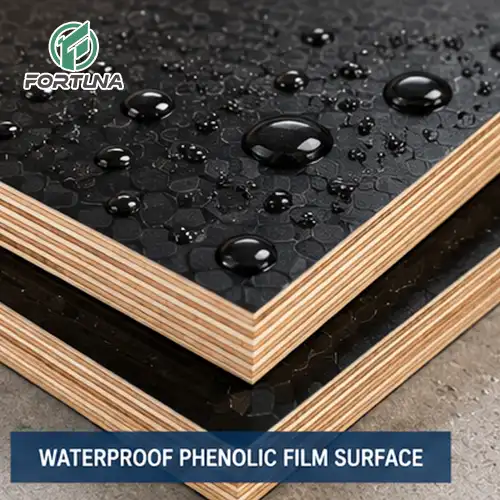
Film Faced Plywood is a high-strength plywood panel coated on both sides with waterproof phenolic film. The smooth film surface protects the plywood from moisture, cement adhesion, abrasion, and repeated use.
It is primarily designed for:
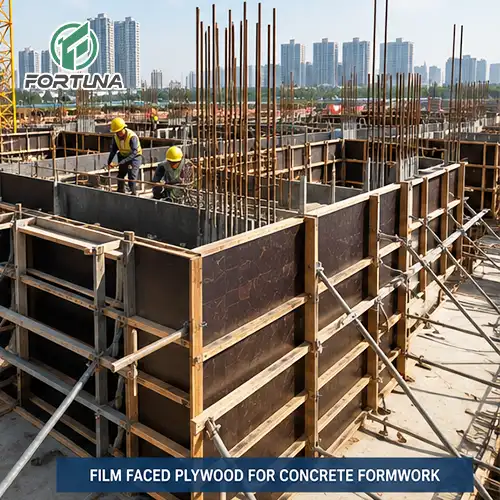
- Concrete Formwork
- High-rise building construction
- Bridges
- Tunnels
- Infrastructure projects
- Commercial construction
The phenolic film provides a clean concrete finish while improving the panel’s durability during repeated formwork cycles.
Main Features
- Waterproof phenolic film surface
- High bending strength
- Excellent wear resistance
- Smooth concrete finish
- Easy demolding
- Multiple reuse cycles
- Suitable for heavy-duty construction
What Is Marine Plywood?
Marine Plywood is a premium plywood manufactured using durable hardwood veneers bonded with waterproof phenolic glue.
Unlike Film Faced Plywood, Marine Plywood is designed for environments with continuous exposure to moisture and humidity.
Typical applications include:
- Boat building
- Ship interiors
- Docks
- Coastal buildings
- Outdoor furniture
- Bathroom furniture
- High-humidity commercial interiors
Marine plywood emphasizes structural stability and long-term resistance to water rather than surface coating.
Main Features
- Waterproof bonding
- High-quality hardwood core
- Minimal core voids
- Excellent dimensional stability
- Superior durability in wet environments
- Long service life
Film Faced Plywood vs Marine Plywood: Quick Comparison
| Feature | Film Faced Plywood | Marine Plywood |
|---|---|---|
| Primary Use | Concrete Formwork | Marine & Wet Environments |
| Surface | Phenolic Film Coated | Natural Wood Veneer |
| Waterproof Performance | Excellent Surface Protection | Excellent Internal Waterproof Bonding |
| Core Material | Hardwood / Poplar Combination | Premium Hardwood |
| Reusability | High (Concrete Formwork) | Long-Term Structural Use |
| Concrete Finish | Excellent | Not Applicable |
| Cost | Moderate | Higher |
| Outdoor Exposure | Temporary | Long-Term |
| Moisture Resistance | High | Very High |
1. Purpose and Application
This is the biggest difference between the two products.
Film Faced Plywood
Designed specifically for Concrete Formwork and repeated construction use.
Ideal for:
- Commercial buildings
- Bridges
- Tunnels
- Infrastructure
- Retaining walls
- Industrial construction
Marine Plywood
Designed for permanent installations in wet or humid environments.
Common applications include:
- Boat manufacturing
- Marine structures
- Kitchens
- Bathrooms
- Exterior furniture
- Coastal construction
Winner: Depends entirely on the project.
2. Surface Finish
Film Faced Plywood features a smooth phenolic film coating that prevents cement from sticking to the panel.
Advantages include:
- Smooth concrete surfaces
- Faster cleaning
- Reduced maintenance
- Higher reuse rate
Marine Plywood has a natural wood veneer surface intended for painting, laminating, or finishing.
Winner: Film Faced Plywood for construction.
3. Water Resistance
Both products use waterproof adhesives, but their waterproof performance differs in purpose.
Film Faced Plywood
The waterproof film protects the surface during construction.
Marine Plywood
The entire plywood structure is designed to withstand long-term moisture exposure.
This makes Marine Plywood more suitable for permanent wet environments.
Winner: Marine Plywood.
4. Durability
Film Faced Plywood performs exceptionally well under repeated concrete pouring when handled correctly.
Depending on quality and maintenance, premium panels may achieve dozens of reuse cycles.
Marine Plywood, however, is built for long-term structural durability rather than repeated construction use.
Winner: Different strengths for different applications.
5. Core Construction
Marine Plywood generally contains:
- Higher-grade hardwood veneers
- Minimal internal voids
- Superior bonding quality
Film Faced Plywood often balances cost and performance by using hardwood, birch, poplar, or mixed hardwood cores depending on project requirements.
Buyers should always request cross-section photos and quality reports before placing bulk orders.
6. Cost Comparison
Price is an important consideration for wholesalers and project buyers.
Film Faced Plywood is generally more economical because it is optimized for construction formwork.
Marine Plywood requires:
- Higher-quality veneers
- Stricter manufacturing standards
- Better waterproof performance
As a result, Marine Plywood usually commands a higher price.
7. Reusability in Concrete Formwork
One of the biggest advantages of Film Faced Plywood is its ability to be reused multiple times in Concrete Formwork.
Factors affecting reuse include:
- Film quality
- Core construction
- Concrete release agent
- Proper storage
- Handling during stripping
Properly maintained premium Film Faced Plywood significantly reduces construction costs over multiple pours.
Marine Plywood is not designed for repeated concrete casting.
Winner: Film Faced Plywood.
8. Which Product Should You Choose?
Choose Film Faced Plywood If You Need:
- Concrete Formwork
- High-rise construction
- Infrastructure projects
- Bridge construction
- Cost-effective reusable panels
- Smooth concrete finishes
Choose Marine Plywood If You Need:
- Boat building
- Marine engineering
- Bathroom furniture
- Coastal construction
- High-humidity interiors
- Long-term waterproof performance
What Global Buyers Care About Most
Based on sourcing trends from contractors, wholesalers, and importers, buyers typically ask:Is Film Faced Plywood waterproof?
Yes. The phenolic film provides excellent waterproof surface protection during construction.Can Marine Plywood be used for concrete formwork?
Technically yes, but it is not cost-effective. Film Faced Plywood is specifically engineered for formwork applications.Which plywood lasts longer outdoors?
Marine Plywood offers superior long-term durability in wet environments.Which plywood provides a better concrete finish?
Film Faced Plywood produces smoother concrete surfaces and easier demolding.Is Marine Plywood stronger than Film Faced Plywood?
Marine Plywood generally has higher-quality cores and greater structural durability, while Film Faced Plywood is optimized for repeated construction use.Why Global Buyers Source from China
China has become one of the world’s largest plywood manufacturing hubs because of:- Competitive factory pricing
- Advanced production technology
- Large manufacturing capacity
- Strict export quality control
- Custom specifications
- Fast international shipping
Why Choose Fortuna Wood?
Fortuna Wood is a professional manufacturer and exporter of plywood products serving contractors, distributors, wholesalers, and project developers worldwide.Product Portfolio
- Film Faced Plywood
- Marine Plywood
- Commercial Plywood
- Birch Plywood
- Furniture Plywood
- Decorative Panels
Advantages
- Strict quality inspection
- Export-ready packaging
- Custom sizes and specifications
- Stable delivery schedules
- Competitive factory pricing
- Professional export support
Website: https://www.fortunawood.cn
FAQs
1. Is Film Faced Plywood waterproof?
Yes. Its phenolic film coating provides excellent protection against water, cement, and abrasion during construction.
2. Can Marine Plywood stay underwater permanently?
Marine Plywood is highly water-resistant, but long-term underwater use still requires proper sealing and maintenance.
3. Which plywood is better for concrete formwork?
Film Faced Plywood is the preferred material because of its smooth surface and high reuse rate.
4. Which plywood is more expensive?
Marine Plywood generally costs more due to higher-quality veneers and stricter manufacturing requirements.
5. Can Film Faced Plywood be reused?
Yes. Premium Film Faced Plywood can be reused many times when properly handled and maintained.
6. Which plywood is best for outdoor construction?
For reusable formwork, choose Film Faced Plywood. For permanent moisture exposure, choose Marine Plywood.
Final Verdict
Although Film Faced Plywood and Marine Plywood share excellent moisture resistance, they are engineered for different purposes.
- Film Faced Plywood is the best choice for Concrete Formwork, delivering smooth concrete finishes, excellent durability, and cost-effective reuse.
- Marine Plywood is ideal for marine construction, boat building, and high-humidity environments where long-term structural performance is essential.
For contractors, wholesalers, and project buyers, selecting the right product based on the intended application will reduce costs, improve project efficiency, and maximize long-term value.