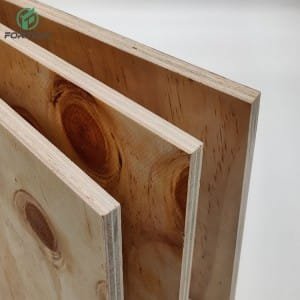
When buying plywood for furniture manufacturing or large construction projects, choosing between Birch Plywood and Poplar Plywood is not simply a matter of price.
The two materials have different characteristics in terms of strength, weight, surface quality, screw holding, machining and cost. For furniture manufacturers, wholesalers and importers, the right choice depends on what the plywood needs to do after it arrives at the factory or jobsite.
Birch plywood is generally the stronger and denser option, making it suitable for demanding furniture, structural and high-wear applications. Poplar plywood is lighter and more economical, making it attractive for furniture components, interior applications and projects where weight and cost are important.
This guide explains the practical differences between Birch Plywood vs Poplar Plywood and helps international buyers choose the right Furniture Plywood for their projects.
Birch Plywood vs Poplar Plywood: Quick Comparison
| Feature | Birch Plywood | Poplar Plywood |
|---|---|---|
| Density | Higher | Lower |
| Strength | High | Moderate |
| Weight | Heavier | Lighter |
| Surface quality | Smooth and uniform | Smooth and workable |
| Screw holding | Excellent | Good |
| Machining | Precise, but harder | Easy to machine |
| Dimensional stability | Very good | Good |
| Typical price | Higher | More economical |
| Furniture applications | Premium and structural furniture | General furniture and components |
| Suitable for CNC | Yes | Yes |
| Suitable for interior projects | Yes | Yes |
| Best value | Performance-focused projects | Cost- and weight-sensitive projects |
The table provides a general comparison. Actual performance depends on plywood construction, veneer quality, core arrangement, adhesive system, thickness and manufacturing standards.
What Is Birch Plywood?
Birch Plywood is manufactured from thin birch veneers laminated together with alternating grain directions.
Birch is a relatively dense hardwood, so birch plywood normally has higher density and strength than lightweight poplar plywood.
Its key advantages include:
High bending strength
Good screw-holding capacity
Consistent veneer structure
Smooth surface
Excellent machining performance
Good edge quality
High dimensional stability
Attractive appearance for exposed applications
Because of these characteristics, birch plywood is widely used in furniture, cabinetry, interior components, transportation equipment and other applications where strength and appearance matter.
For manufacturers purchasing Furniture Plywood, birch plywood is particularly attractive when the finished product needs to withstand repeated loading, frequent assembly or heavy use.
What Is Poplar Plywood?
Poplar Plywood uses poplar veneers to create a lightweight plywood panel.
Compared with birch, poplar has a lower density. This makes poplar plywood easier to transport, handle and process.
Typical advantages include:
Lightweight construction
Competitive price
Easy cutting and machining
Good surface for painting or laminating
Suitable strength for many furniture applications
Lower panel weight
Efficient material handling
Poplar plywood is often selected when maximum strength is not the primary requirement.
For example, cabinet components, drawer parts, interior panels, furniture backs and lightweight structures may not require the additional density of birch plywood.
Birch Plywood vs Poplar Plywood: Which Is Stronger?
Birch plywood is generally stronger than poplar plywood.
Its higher density and strong veneer structure give it better mechanical performance in many applications.
This matters when plywood is used for:
Furniture frames
Shelving
Workbenches
Heavy-duty cabinets
Structural furniture components
Load-bearing panels
Repeatedly assembled products
However, strength should not be judged only by wood species.
The actual performance of plywood also depends on:
veneer quality + number of plies + core construction + adhesive + pressing process + thickness.
A well-manufactured poplar plywood panel can perform very well in applications where its design requirements are within its mechanical limits.
For B2B buyers, comparing the manufacturer’s technical data is therefore more reliable than comparing species names alone.
Which Is Better for Furniture Manufacturing?
There is no universal winner.
The better option depends on the type of furniture being produced.
Birch Plywood for Premium Furniture
Birch plywood is a strong choice for furniture that requires:
High load capacity
Long service life
High-quality machining
Exposed plywood edges
Frequent assembly and disassembly
Premium positioning
Its uniform multi-ply structure produces clean edges that can be particularly attractive in modern furniture designs.
Birch plywood is therefore frequently considered for tables, chairs, cabinets, shelving systems, workstations and high-end interior furniture.
Poplar Plywood for Cost-Efficient Furniture
Poplar plywood can be more attractive when manufacturers need:
Lower material costs
Lightweight furniture
Easy machining
Painted or laminated surfaces
Large production volumes
Reduced shipping weight
For furniture manufacturers producing large quantities, the lower density of poplar can become a meaningful logistical advantage.
Birch Plywood vs Poplar Plywood: Which Is Lighter?
Poplar plywood is normally lighter than birch plywood.
This can make a significant difference when thousands of plywood panels are purchased for a project.
Lower panel weight can provide advantages in:
Transportation
Manual handling
Installation
Furniture assembly
Shipping costs
Product weight
For example, lightweight furniture manufacturers may prefer poplar plywood because reducing the weight of every component can make the finished product easier to transport and install.
For heavy-duty furniture, however, the additional weight of birch plywood may be justified by its higher strength and durability.
Which Has Better Surface Quality?
Both can provide good surfaces when manufactured to the appropriate grade.
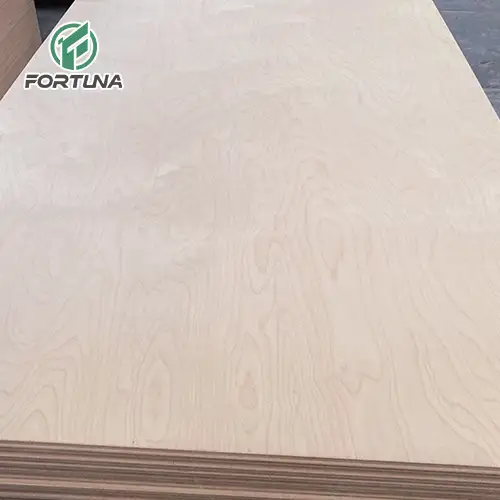
Birch plywood is known for its relatively uniform veneer structure and is often chosen for applications where the plywood itself is visible.
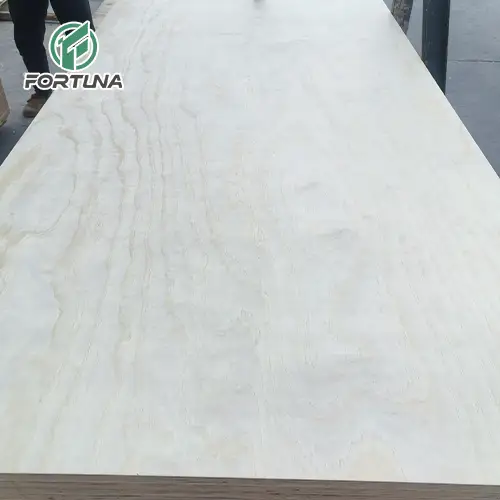
Poplar plywood can also provide a smooth surface suitable for:
Painting
Veneering
Lamination
Melamine or decorative overlays
Interior furniture components
For buyers, the face veneer grade is more important than simply choosing birch or poplar.
When ordering furniture plywood, specify requirements such as:
Face veneer grade
Back veneer grade
Knots and repairs
Color consistency
Sanding quality
Thickness tolerance
Surface smoothness
This avoids misunderstandings between the buyer and supplier.
Which Plywood Is Better for CNC Cutting?
Both Birch Plywood and Poplar Plywood can be used for CNC machining.
The choice depends on the finished product.
Birch plywood provides excellent edge quality and is suitable for detailed furniture components where strength and clean machining are important.
Poplar plywood is softer and easier to cut, which can be advantageous for high-volume machining and lightweight components.
For CNC furniture production, buyers should also evaluate:
Thickness tolerance
Panel flatness
Veneer bonding
Core gaps
Surface quality
Machining requirements
A stable plywood panel can reduce machining problems and material waste.
Which Is Better for Screws and Fasteners?
Birch plywood generally provides better screw-holding performance because of its higher density.
This makes it useful for furniture that is frequently assembled, disassembled or subjected to significant mechanical loads.
Poplar plywood can still perform well with screws and other fasteners, particularly when the panel thickness and construction are properly selected.
For large furniture projects, buyers should consider the complete design rather than plywood species alone.
If a cabinet side, shelf or frame carries substantial weight, increasing plywood thickness may sometimes be more practical than changing from poplar to birch.
Is Birch Plywood More Expensive Than Poplar Plywood?
Usually, yes.
Birch plywood normally costs more because birch veneers are denser and the product is often positioned for higher-performance applications.
Poplar plywood can provide a more competitive option for buyers who need a balance between performance and cost.
But purchase price should not be the only procurement metric.
For international buyers, the total cost can include:
plywood price + shipping + handling + machining waste + replacement rate + finished-product performance.
A more expensive plywood can be the better choice if it reduces damage, rejects or product failures.
Conversely, using premium birch plywood for a low-load application may unnecessarily increase material costs.
How Should Importers Choose Between Birch and Poplar Plywood?
For bulk buyers, the best approach is to start with the application.
Choose Birch Plywood When:
Strength is a major requirement
Furniture will carry heavy loads
Plywood edges will remain visible
Premium appearance is important
High screw-holding performance is required
The product will be frequently assembled
Long-term durability is a priority
Choose Poplar Plywood When:
Low weight is important
Material cost needs to be controlled
The furniture is not heavily loaded
Panels will be painted or laminated
Easy machining is preferred
Large-volume production is required
Transportation weight is a concern
What Should B2B Buyers Check Before Ordering Furniture Plywood?
For importers and wholesalers, a product name is not enough.
Before placing a bulk order, request a complete specification covering:
1. Thickness and dimensions
Common plywood sizes include 1220 × 2440mm and 1250 × 2500mm, while customized sizes may also be available.
2. Core construction
Ask whether the panel is full birch, full poplar or a combination structure.
3. Glue type
Depending on the application, buyers may require MR, E1, E0, WBP or other adhesive specifications.
4. Face and back grade
Confirm the required veneer grade and whether repairs are acceptable.
5. Thickness tolerance
Consistent thickness is particularly important for CNC machining and mass furniture production.
6. Moisture content
The appropriate moisture level helps reduce problems with dimensional changes after shipment.
7. Certifications
Depending on the destination market and application, buyers may require FSC, CE, CARB, EUTR/EUDR-related documentation or other compliance documents.
Birch Plywood vs Poplar Plywood: Which One Should You Buy?
For most procurement decisions, the answer can be summarized simply:
Choose Birch Plywood when performance, strength and premium furniture quality are the priority.
Choose Poplar Plywood when lower weight, easier processing and competitive cost are more important.
Neither material is universally better.
For furniture manufacturers, the correct plywood is the one that meets the technical requirements of the finished product while keeping the total production cost under control.
For wholesalers, importers and project buyers, the most important step is to compare core construction, face grade, glue, thickness tolerance, certification and production consistency, rather than comparing plywood species or price alone.
FAQs About Birch Plywood and Poplar Plywood
1.Is birch plywood stronger than poplar plywood?
Generally, yes. Birch plywood normally has higher density and mechanical strength than poplar plywood, although actual performance depends on plywood construction and manufacturing quality.
2. Is poplar plywood good for furniture?
Yes. Poplar plywood is widely suitable for furniture components, cabinets, interior panels and other applications where lightweight construction and cost efficiency are important.
3. Is birch plywood better for premium furniture?
In many cases, yes. Its strength, uniform structure and clean edges make birch plywood suitable for premium and high-use furniture.
4. Which plywood is cheaper, birch or poplar?
Poplar plywood is generally more economical than birch plywood, although prices vary according to grade, thickness, glue, dimensions, certification and order quantity.
5. Which plywood is better for CNC furniture?
Both can be used. Birch is often preferred for high-strength and exposed-edge furniture, while poplar can be attractive for lightweight, high-volume production.
6. Can Fortuna supply both birch and poplar plywood?
Yes. Fortuna can supply plywood using different core materials and specifications for furniture, interior and project applications. Buyers can request the required dimensions, thickness, core, glue and surface grade according to their production requirements.
Final Takeaway
Birch Plywood vs Poplar Plywood is ultimately a performance-versus-cost decision.
Birch plywood offers higher density, strength and premium performance. Poplar plywood offers lower weight, easier processing and a more economical solution for many furniture applications.
For global B2B buyers, the right choice should always be based on the finished application, required performance, production process and total landed cost.
If you are sourcing Furniture Plywood for a large production order or project, Fortuna can help match the plywood construction to your required application, dimensions, thickness, glue system and purchasing volume.
Related Articles
- All Posts
- Company News
- Product Post

What Is WBP Glue Plywood? A Complete Buyer’s Guide to Waterproof Plywood When buying plywood for construction, furniture, transportation, marine-related applications, or other moisture-prone environments, one specification appears frequently in supplier quotations: WBP glue plywood. But what does WBP actually mean? Is WBP plywood completely waterproof? Is phenolic glue better...
China remains the world’s largest exporter of plywood, supplying furniture manufacturers, construction companies, wholesalers, distributors, and project contractors across North America, Europe, Australia, the Middle East, and Southeast Asia.However, while there are thousands of plywood factories and trading companies in China, not all suppliers offer the same level of quality,...